
Yesterday was the iPhone launch, and it was actually a refreshing one. It was one of the first years that I think I had decently low expectations going in, but was incredibly surprised (and delighted) coming out. This is partly because for the first time in years, quite a few of the leaks, rumors, and reports leading up to the event were pretty wrong. The other part is just how drastic the change to the iPhones was after seeing them in person. Specs and images really do not do these devices justice.
Just because it’s obviously top of mind, iPhone Air. By far the thinnest and lightest feeling phone. Apple’s weight distribution is near perfect, the curve of the polished titanium into the glass felt outstanding. I can not emphasize this enough, it is unlike anything else.
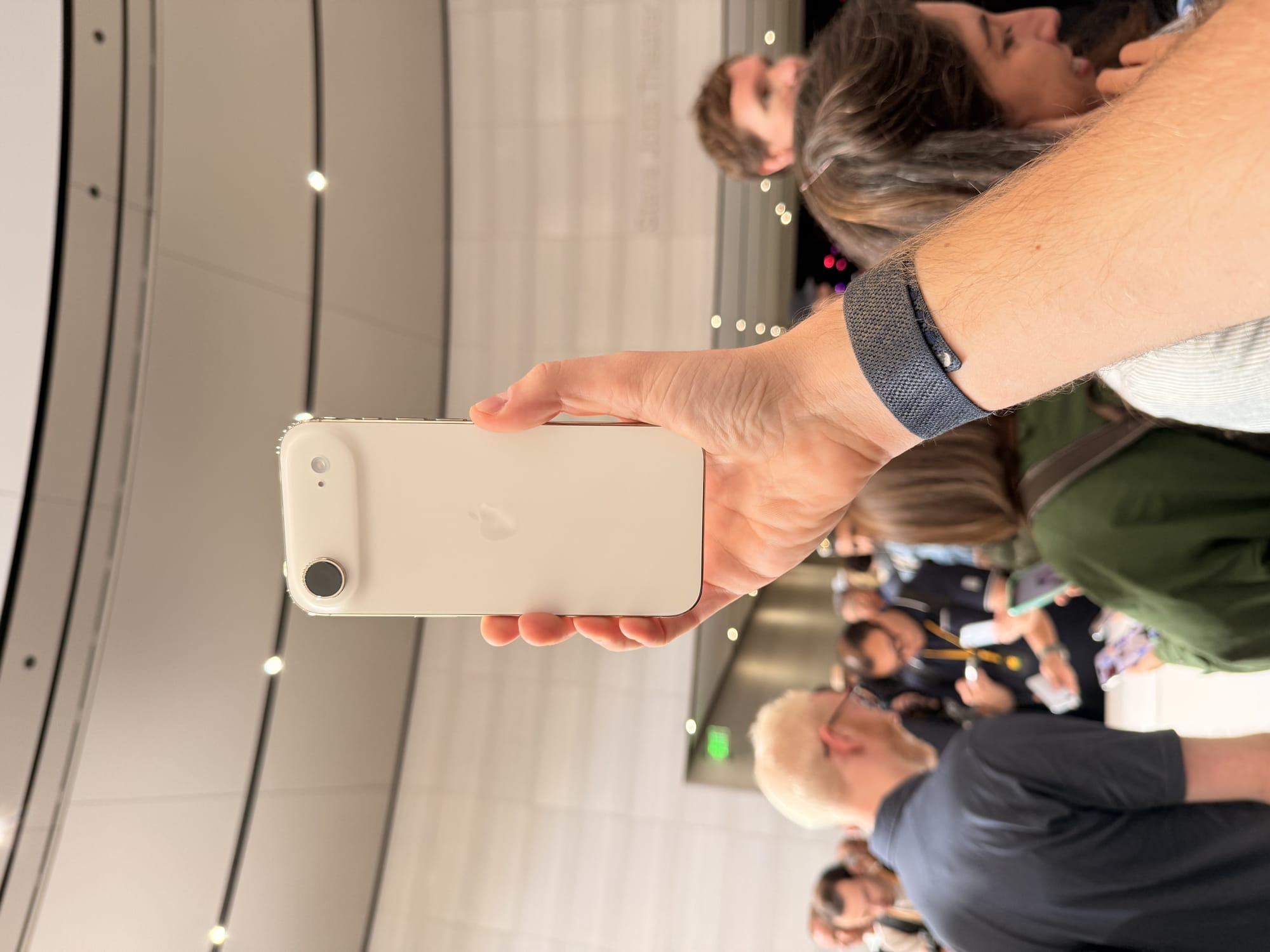
Will there be tradeoffs on battery and camera? Sure, but I’ll get into why that’s probably worth it and who it’s for later on.
The iPhone 17 Pro/Pro Max fixed one of my main complaints about the iPhone 16 Pro Max I’ve been using for the past year as well, the titanium body. It got so hot. I would be charging the phone while driving, and in a 15 minute drive with the AC on and windows down on a sunny day, the phone would be nearly too warm to touch and stopped charging from heat. Using the phone outside would be near impossible in sunlight, not because the display wasn’t bright but it would get so hot it would have to turn the display down!
The new aluminum body should help with this, alongside the vapor chamber and new A19 Pro chip. It has a larger L2 cache in each CPU core, which Apple says makes it the most efficient iPhone SoC yet. Mix a better display, better chip, better body, better cameras, and unique design into a single device and you have something that’s exciting and fresh. It’s nice!
One of the most noticeable changes to Apple’s lineup this year was the sort of restructuring of devices for prosumers. Generally, I consider this a demographic that wants the best products but doesn’t really need it. I include myself in this category, I will always get the top of the line, most powerful product. Best display, best camera, best processor. The reality is, I will never really push this to its limits nor will I ever use the cameras in a way that really requires me to have the Pro phone, like ProRes RAW. This is basically the majority of iPhone __ Pro owners.
With iPhone Air, Apple gives them a better option: a device with the performance and display of a Pro iPhone, but with an incredibly unique design and in-hand feel. This simply comes at the cost of the number of cameras and battery. While a lot of people are flocking to Twitter, Instagram, and TikTok commenting on how bad the iPhone Air battery is, the reality is they have absolutely no clue if it is or isn’t. Apple is using the most efficient chip, most efficient modem (new C1x 5G modem), and new N1 wireless chip. With that being said, you can build an efficient phone but can’t get around physics. It definitely won’t match a device with a physically larger battery, but I really don’t think it will be as bad as many are assuming.
Now, this more premium middle-tier device allowed Apple to make the Pro iPhone even more Pro. This means aluminum body, focused on heat dissipation, a much larger and more performant camera, as well as a massive battery. This, more or less, cements the Pro iPhone as the most camera focused, professional iPhone there is.
The base iPhone still remains the best value for most people. While there was a bit of rambling here, this leads to the point I want to make: people wanted the Pro iPhone historically because they didn’t want to feel like they got a worse product, even if they didn’t need it. The iPhone Air allows for those prosumers who don’t need the Pro features to get a device that feels premium and unique to fill that gap. They will feel like they are getting the best, without actually needing to have features that are wasted on them.
This is how I think it breaks down now: iPhone 17 – for everyone. iPhone Air – for prosumer. iPhone 17 Pro/Pro Max – for professionals and creatives.
Quick level‑set: there’s been a lot of chatter from investor and tech circles about Apple, AI, and what didn’t show up on stage this year. Rather than piling on, it’s more useful to look at what Apple actually optimizes for and where AI realistically fits. Here’s how I see it.
Apple is, at its core, not an AI company. I say this because there is always some debate if they are a hardware first or software first company, and I believe the answer to that is more or less dependent on who you ask. Apple builds hardware to showcase their software, or builds software to power their hardware. Both are true, which way to look at it depends on you.
AI companies, on the other hand, are largely building around unknowns. Plenty believe AI requires purpose built hardware, others think it could be an app. Some think it requires large GPUs and NPUs and it will all run on the edge, others think it’ll be hybrid and mostly in the cloud. At the end of the day, nobody knows what consumers will want, what will stick, where it will run, or how it will work. Plenty of companies have made big claims and already had to walk back on those, as they realized their vision for AI was not happening. This will continue to happen, until we all figure out what consumers broadly resonate with.
For a moment though, let’s just talk about how Apple makes money since this is the important part at the end of the day. Apple has 2 sources of revenue, selling products (selling hardware) and selling services (subscriptions services + app store). Generally, those services are bought by customers who buy their products. This means fundamentally, for Apple to grow revenue, Apple must sell hardware, powered by their software, and make said hardware and software experience compelling. If this experience is compelling, then compelling first party experiences will follow, as well as an ecosystem of developers to build on top of it. After all, the iPhone is nothing without its apps and developers.
Consumers, they are buying a device because that device is good, and installing the app they want on it. Apple made devices this year that seem to have very positive consumer feedback, and introduced a compelling new form factor. It solves pain points for users while innovating in places that matter, like selfie cameras positioning and display brightness. Little things, but overall do help increase the positive experience.
Back to the AI point, phone users don’t want or care about AI today. The AI they do want and do care about right now exists in apps. Now, some will say there were no AI advancements and therefore they are behind. I can understand that, but frankly, it ignores the biggest advantage Apple has and what has made them so good for so long: Apple Silicon. The new GPU architecture in A19 includes new Neural Accelerators in each GPU core. These are designed for machine learning, accelerating matrix multiplication. It essentially allows Apple to use the GPU in tandem with the NPU (Apple Neural Engine) to accelerate local models. Whether this model is trained by Apple, licensed from *insert AI lab here*, or an open-weight model, the devices have more than enough compute for the future.
The reality is, rushing AI for the sake of AI could be more harmful than waiting. Apple has the new Siri coming next year, and that delay soured the entire Apple Intelligence stack (which is FAR more than just Siri) but that didn’t seem to make much of a difference. Apple is currently trying to make a more helpful, more intelligent iPhone as we know it today. That’s infusing AI into it, but for some reason there are quite a few very loud personalities that think AI requires new form factors and this seems to be hitting classic consumer electronics brands hard. It really shouldn’t, at least not for the next few years, and by the time it matters I can near guarantee Apple will have a product or suite of products connecting their ecosystem with AI in a meaningful way, providing good user experiences.