
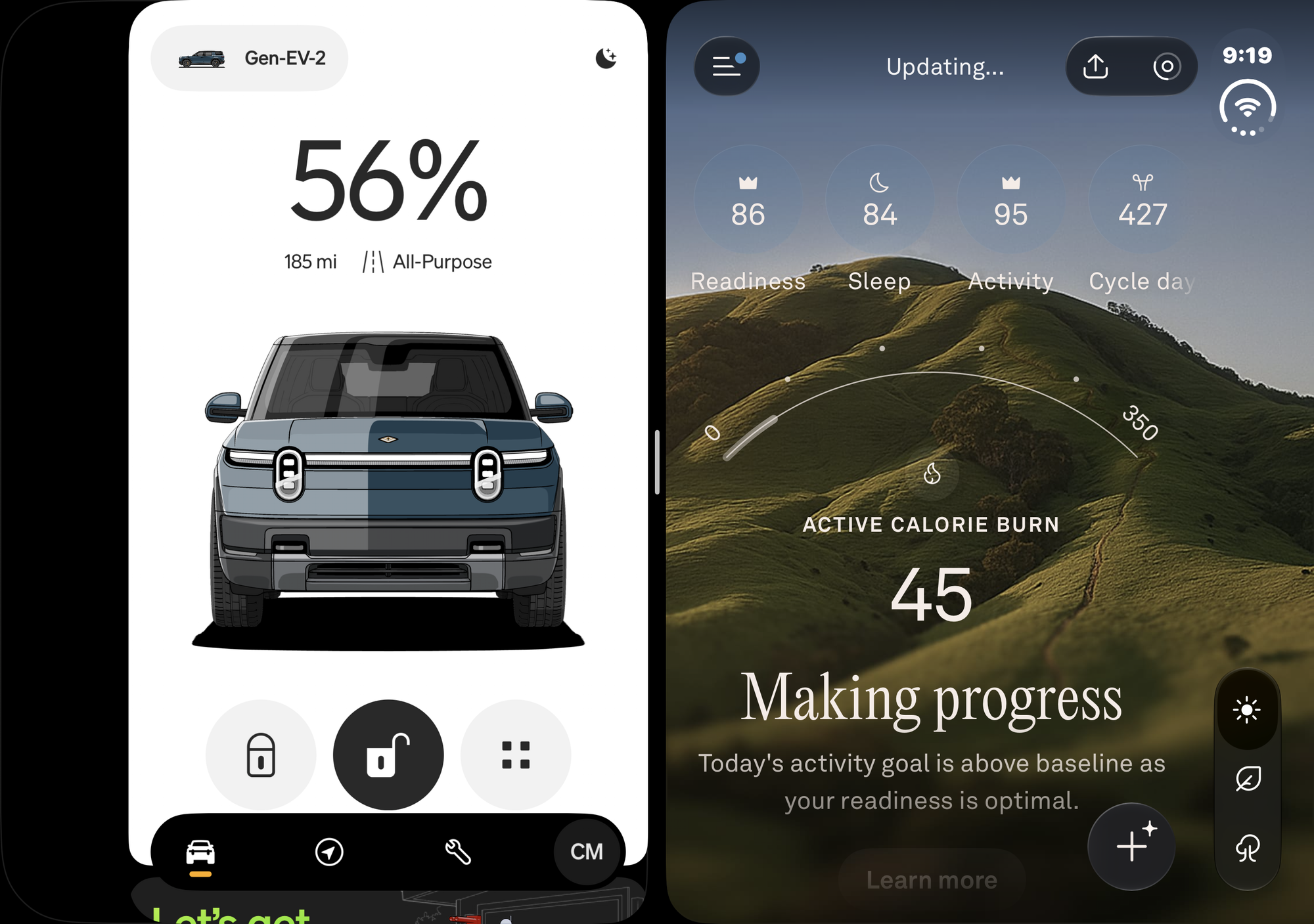
I have been using iPhone Duo for about a week. At launch, I wrote in iPhone Duo: What Apple Bought by Waiting that while I liked the hardware, I was most impressed by how thoughtfully Apple designed the UI to take the friction out of moving from posture to posture. With updated apps trickling in over the past week, I have seen developers build on that work. Apps rebuilt with the two screens in mind lift the experience well beyond what basic support delivers.
A message to developers, and one to Apple
Netflix, Oura, Claude and Instagram, to name a few, have all gone through a full redesign to take advantage of both screens. They are the apps I hope other developers will look at when figuring out how far to push their own redesign. Basic tablet support is fine. Apps run on the inner display, scale sensibly and get the job done. That level of support will not drive deeper engagement with your app, though. My message to developers is to update, and to lean into AI tools to help with the work. My message to Apple is to make that move a no-brainer for them: continue to provide tools that make customization easier, and make sure the simulator experience is a great one, especially given the supply constraints, as smaller developers may not have been able to secure a unit on preorder day.
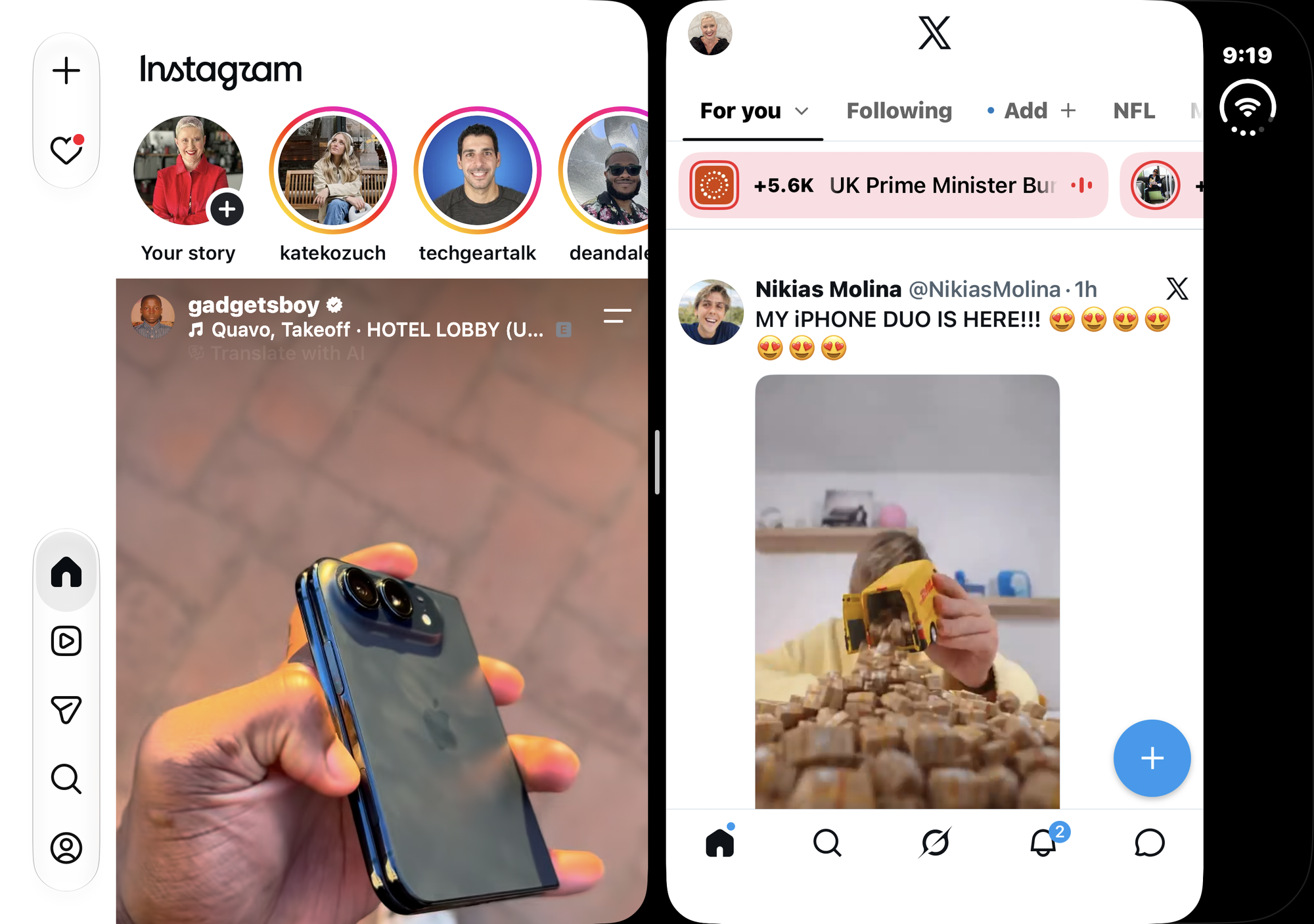
Dedicated apps are key to success for both Apple and developers. The Duo's appeal reaches beyond early adopters to lifestyle and fashion buyers and more. What these users have in common is disposable income, both to buy the device and to pay for apps that deliver a great experience.
How it sits in the hand
Aside from the work Apple did on the display to limit the crease, the first thing I noticed was the weight. If you have held a Galaxy Z Fold 8, you will feel the difference. If you are coming from an iPhone Pro Max, the Duo feels dense more than heavy. I put that down to it being shorter, so it sits differently in your hand, especially if you have small hands like mine. Closed, the 5.4-inch cover display still offers about 90 percent of the screen area of an iPhone 18 Pro.
Open it, and the weight is distributed so evenly that you stop noticing it. The thinness is what you notice. Content looks great on either screen, and the range of postures lets you consume it the way you prefer, depending on where you are. I know some people are unhappy with the nano-texture matte finish on the inner display. I have not found that I enjoyed content any less because of it.
Familiar, with a little adjusting
I want to focus most of my first impressions on the people I think make up the bulk of those interested in the Duo: current Apple users who have never owned anything but an iPhone. They will pick up a device that looks very familiar and behaves a little differently. The learning curve is small, and there is a short adjustment period, mostly because of new gestures. With controls moved to the side in iOS 27, you tap to open Control Center instead of swiping down. To go back, you swipe from left to right or use the arrow on the right.
Unlocking also moves to Touch ID in the side button, since the Duo has no Face ID. I know some people have complained about that, but it has been a non-issue for me. The way most people will hold the device, a finger rests by the sensor most of the time, so there is no wait to unlock. When you are not holding it, Apple Watch unlock fills the gap, and I am willing to bet most people buying a Duo own an Apple Watch.
Camera and battery
The camera is usually a point of contention on foldables, which rarely match the camera systems on their makers' top models. The Duo pairs a 48MP Fusion main camera with the same Fusion ultra wide as the 18 Pro, and has no dedicated telephoto. It is certainly not my iPhone Pro Max. For selfies, and for anything that did not call for long zoom or very low light, it has done what I needed for both photos and video. One thing to get used to is hand positioning. Because the device is shorter, it is easier to end up with a finger over the lens.


Battery life has been good. Once the phone finished setting up and indexing for Siri AI, I usually ended my day with between 10 and 20 percent left, which is not far off what I was getting on the iPhone 18 Pro Max.
Daily driver
I use different phones all the time, and I have made no secret that my SIM card has not left an iPhone since the iPhone launched. So I was very curious to see whether a foldable iPhone could become my main device.
On Android, the closest I got was the Samsung Galaxy Z Fold 8. Its form factor helped me decide which posture to use for which task, which made its learning curve lower than the Galaxy Z Fold Ultra's, as I wrote in my report for Creative Strategies. Even so, the effort was not offset by enough apps taking advantage of both screens. I spend less time on Android, so a direct comparison with the Duo would not be a fair one.
With the Duo, the apps are starting to justify the effort. On a flight this week, I watched the end of the first episode of The Diplomat on Netflix, answered emails with the Duo fully open since Gmail has not been optimized yet, read the latest Diligence Stack report, and worked through content ideas with Claude.
I can see myself keeping it as my daily driver. When I travel, my iPad Pro and laptop still come with me, and the Duo lets me get much more done before I open either one.
I also find I don't feel compelled to unfold the Duo as often as I expected. Some of that is habit, after years of using a traditional iPhone. Some of it comes from how good the cover display's form factor is, and it makes me wonder whether the iPhone mini might find a new life in this shape.
The camera is where I would like to see Apple do more, using computational photography to close the gap with the iPhone Pro camera a little further. It is really the only compromise I feel I am making between the two.